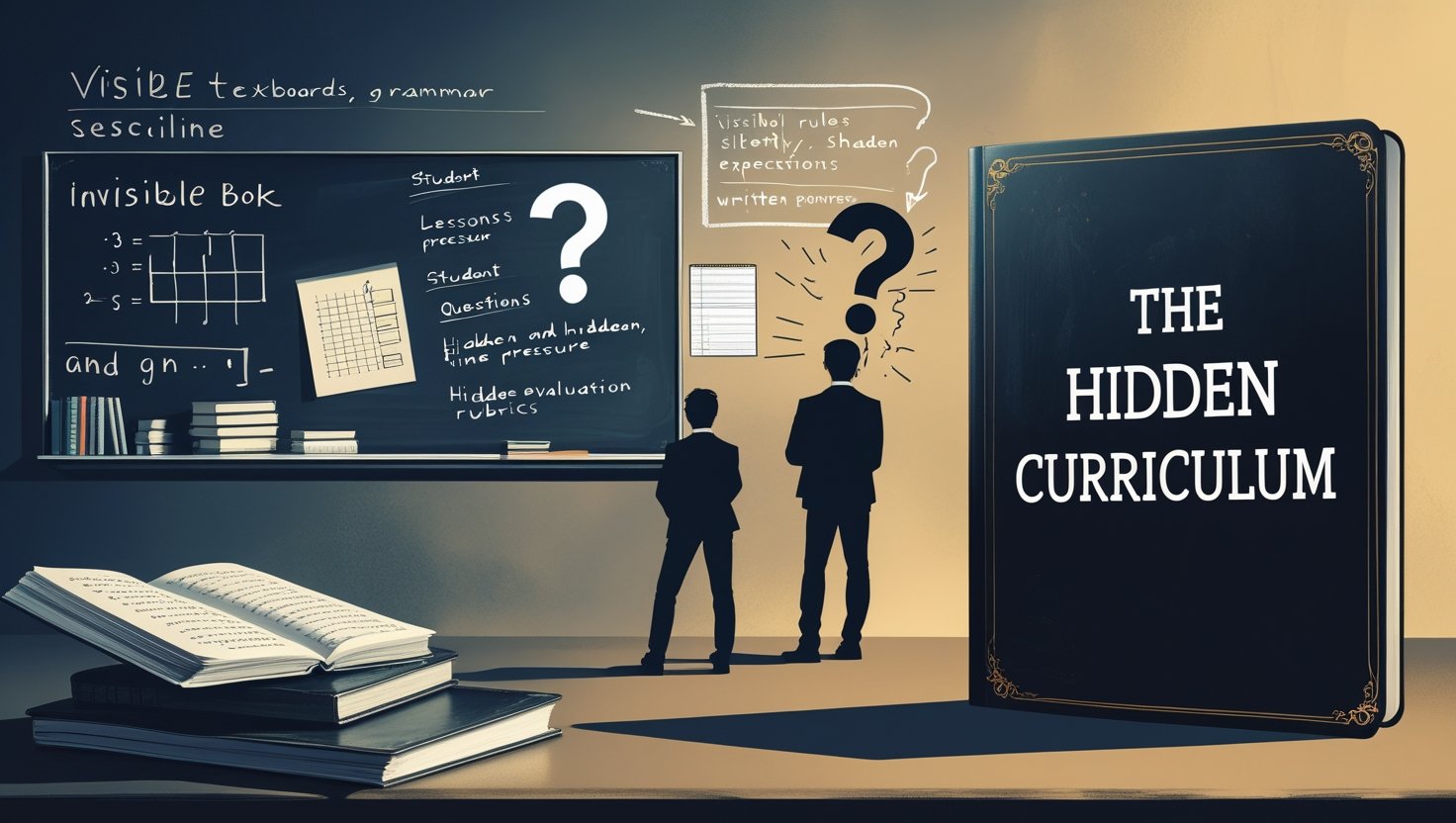
Education is not just limited to textbooks and exams. There is something inside every school, college, or university that is not formally part of the syllabus, but students learn a great deal from it. This thing is called “Hidden Curriculum.” This is an invisible way through which students are taught the norms, values , and expectations of society without any formal lesson plan. Such as being punctual, respecting authority, understanding the meaning of silence, or following gender roles, all these are part of the hidden curriculum.
When a student observes the tone, behaviour, and reaction of the teacher in the classroom, he is not just learning a subject but becoming a part of a social system. In this process, students are indirectly told what is more important, what kind of behaviour is accepted, and people from which class or background are considered valued.
The impact of the hidden curriculum varies for each student. Some students benefit from it, but some feel as a result that their identity or background is not being valued. This system often silently promotes inequality and shapes the thinking and behavior of students in such a way that they adopt this influence without noticing it.
The purpose of this blog is to understand this hidden curriculum, recognize its significance, and see how we can take it in a positive direction.
Sources of the Hidden Curriculum in Schools:
The real source of the hidden curriculum is not just textbooks or teachers, but it comes from things that are not often noticed. First of all, the classroom environment itself is a big source. The arrangement of benches, the behaviour of the teacher, the method of discipline, and even the school uniform send a message to the students. When in a school, students are asked to maintain strict silence or are discouraged from asking questions, the hidden message there is that the authority should not be challenged. Similarly, if teachers pay more attention to certain students just because of their marks or background, other students get the message that they are less important. School assemblies, classroom posters, reward systems, and detention policies also teach students through the hidden curriculum, which values matter more in society.
Peer pressure is also an important source where students learn by observing each other’s behavior, what is considered cool, and what is not. Language also plays a role in the hidden curriculum – if the school promotes speaking only in English, then students understand that their local language or culture has no value. When teachers and administrators praise certain behaviors and ignore or punish others, students get an indirect message about what is expected from them. All these things are the unseen sources of the hidden curriculum that silently shape the minds of students.
Values and Behaviors Taught Unconsciously:
The most important part of the hidden curriculum is the values and behaviors that students learn without being formally taught. When a student observes the school rules, the teacher’s reaction, and the treatment of other students, he gradually starts understanding the norms and moral values of that society. For example, students get a lesson in punctuality when they are punished for coming late or their attendance is affected. Obedience is promoted when students are encouraged to simply follow instructions, without asking questions. In this way, competition and comparison are also common values that are taught to students through every test and grade.
Teachers’ attitude and reaction can also unconsciously develop respect for authority or an inferiority complex in students. Gender roles are also part of the hidden curriculum, where boys are given leadership roles and girls are seen in supportive roles. When schools award only top performers, the message is that success is measured by grades alone. Cultural behavior, such as treating students differently on the basis of silence, physical appearance, or social background, also sends hidden messages. All these behaviors silently design students’ thinking, confidence, and their relationship with society, which deeply affect their future identity and decision-making.
Impact on Student Development and Identity:
Hidden curriculum has a profound impact on student development and identity. When a student is exposed to unspoken rules and indirect messages in the school environment every day, his or her self-image is gradually shaped. If a student repeatedly sees that his or her background or accent is not being accepted, he or she may develop a complex and insecurity. Similarly, if a student receives excessive praise simply because he or she is outspoken or confident, other students assume that only these qualities are valuable. In this process, students either suppress or modify their real identity so that they can feel accepted.
When the hidden curriculum considers a particular culture, language, or behaviour to be superior, students try to adopt that culture even if it goes against their values. This pressure arrests their natural growth and develops an artificial identity. The moral development of children is also affected by this curriculum as they learn to judge what is socially acceptable and what is not. Thus, their decision-making and critical thinking skills are limited. The hidden curriculum creates an unconscious guideline within students on how to behave, how to feel, and how to think, which deeply influences their academic performance, relationships, and overall life choices.
Challenges and Criticisms of the Hidden Curriculum:
One of the biggest criticisms of the hidden curriculum is that it silently promotes inequality. When school systems give more preference to a particular group or behaviour, other students feel inferior. For example, if teachers give more opportunities to academically strong students, average or slow learners get the message that they are less important. Similarly, if a culture or language is favored, students from other cultural backgrounds feel ashamed of their identity. Gender bias is also a serious issue where boys are taught leadership and girls are taught obedience, which promotes long-term social inequality. Another issue of hidden curriculum is that it suppresses critical thinking.
When students are forced to just follow instructions, they stop raising questions and learn to blindly accept authority. This affects both their creative thinking and confidence. Another challenge is that the hidden curriculum leads to unhealthy competition and anxiety among children. When the focus is only on grades or performance, students start considering each other as rivals. In the hidden curriculum, not every student does not gets equal support, which is the basic principle of education. This system silently creates hierarchy, discrimination, and bias, which is not just limited to the classroom but reaches the whole society.
Conclusion:
Understanding the hidden curriculum and recognizing its implications has become very important for today’s education system. It is an invisible force that is part of the learning process of every school, classroom, and student. Through this curriculum, students learn not only academic knowledge but also social norms, values, behavior, and expectations. But these hidden lessons can prove harmful for them when they promote inequality, bias, and discrimination. Therefore, it is important that schools make conscious efforts in their environment, teacher training, and policy making about what kind of hidden messages they are sending to their students. Teachers should also think deeply about their behaviour, language, and classroom dynamics so that they can create an inclusive and respectful learning space. Parents and policymakers should also not be limited to just the syllabus, but should see how the educational setup is shaping the thinking and identity of the students. Unless the hidden curriculum is openly addressed, it is difficult to bring true equality and fairness in the education system. The purpose of this blog is to we should understand the invisible role of the hidden curriculum and use it in a positive and inclusive direction so that every student gets equal opportunity for their growth a